Summary
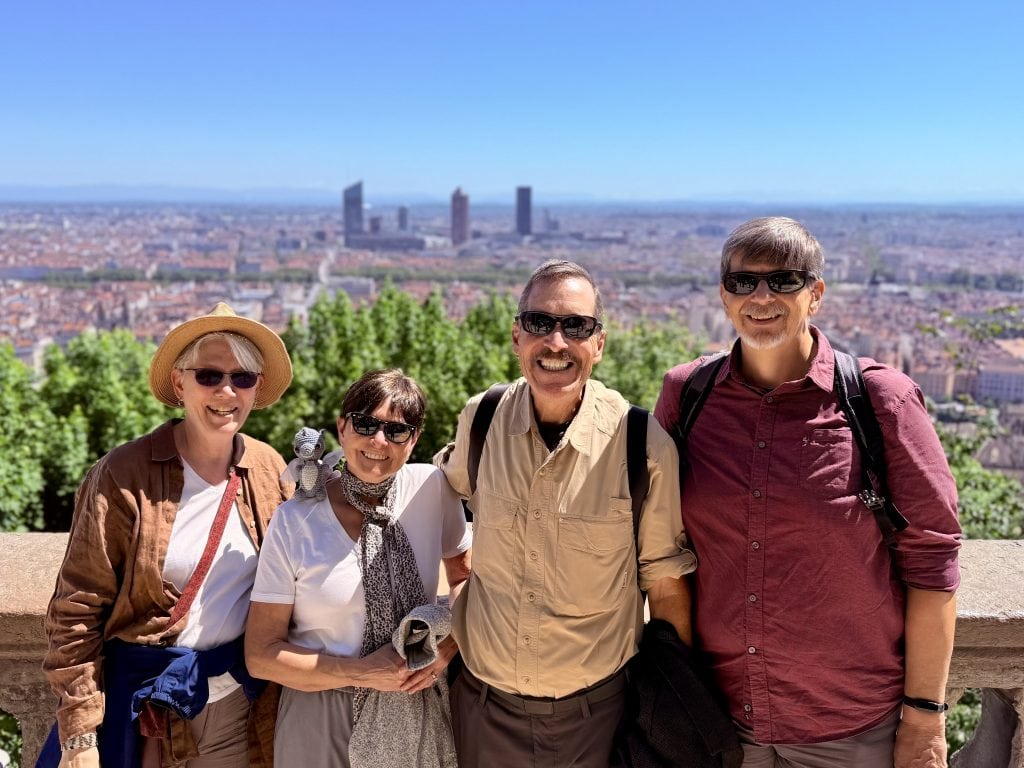
Started a great walking tour of Lyon from the Place des Terreaux/City Hall/famous Bartoli fountain through the Old City with its famous passageways. Took the funicular up to the ornate Basilica Notre-Dame de Fourvière and enjoyed beautiful views of the city. Stumbled on a good place for lunch then hung out at our apartment resting our collectively exhausted legs and feet. Yummy dinner at home again.
Details
Today’s highlight is a three-hour secret tour of Lyon, or maybe it’s a tour of the secrets of Lyon. Yesterday we got a message (well, WhatsApp) from Toni our guide. Spelled like that is it a guy? a girl? I guess we’ll find out.
Our meeting point is at the Hôtel de Ville which is further than many in our group want to walk (especially knowing how far we’ll probably be walking on our tour. We opt instead to catch an Uber over there from our VRBO. Ron summons one and it’s on its way. Unlike in the US we aren’t provided the full license plate number, but rather just the first digit/number, and the last two. I guess that’s so you can’t stalk your Uber driver.
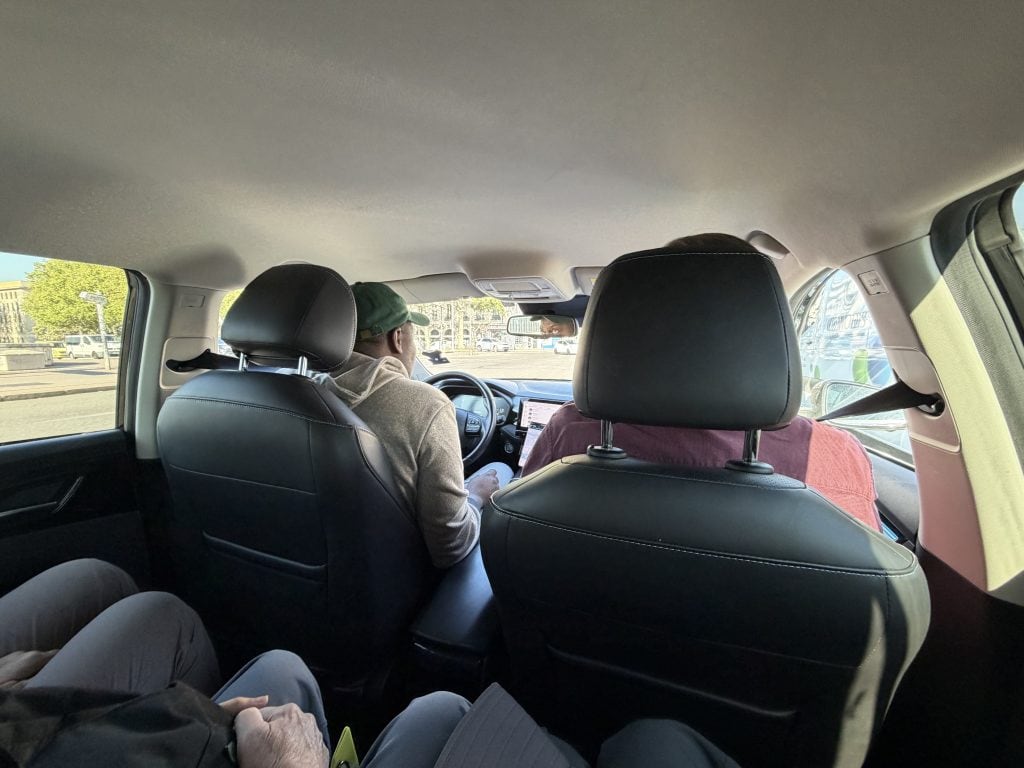
Minutes later our ride shows up, but the driver expresses dismay that there are four of us. This won’t work. We can’t do that. It’s not allowed. Are you sure? Yes. We briefly have a Mexican, er, French standoff. He eventually says that he’ll make an exception this time and we all pile in. The front seat is totally empty, so fitting the four of us is no problem at all. Our driver maybe was hoping we’d say the magic words “will it help if we give you this 10 Euro note?” which we never did. En route I ask AI what the rules are. Four is a perfectly acceptable number, but drivers are allowed to make their own rules based on circumstance, vehicle or personal preference.
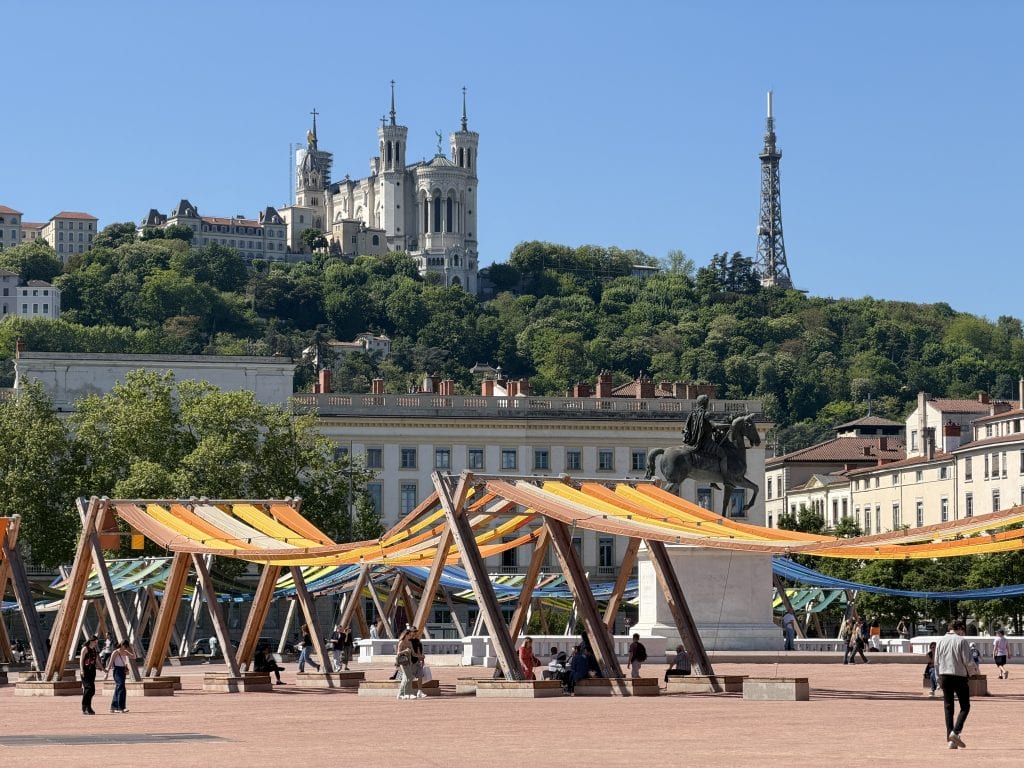
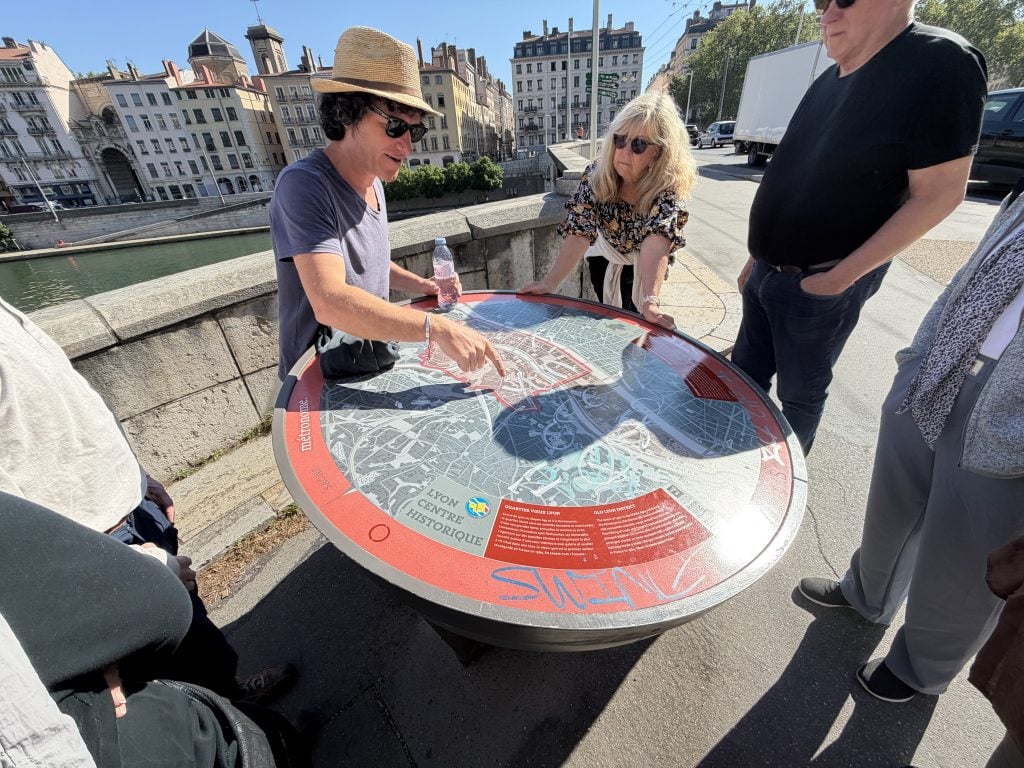
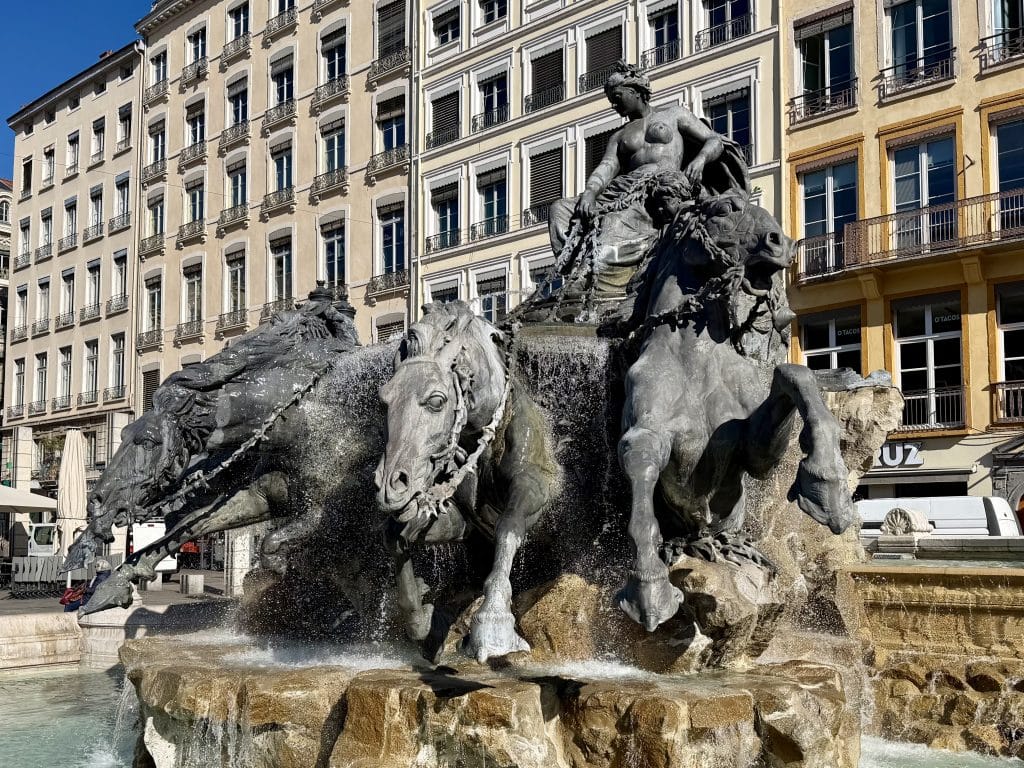
At the Hôtel de Ville we soon meet Toni. He’s a 40s / 50s something guy from Barcelona. He gathers up all of the people who should be here (minus two, who never show). We’re eight and we’re all from the States. Toni’s accent is pronounced but he’s understandable as he explains to us the Bartoli fountain in front of which we’re standing. Bartoli did the Statue of Liberty, of course, and the technique for that, and this fountain, are the same. There’s Marianne (the emblematic French lady who can never cover her breasts) and four horses (one for each of the major French rivers). The horses are all pointing towards the nearby Rhone and Soane rivers, two of the four. The other two? Anyone? Beuller? Beuller? Karen comes up with the other two.
We learn where we’re standing they’ve have guillotinings up until the 1970s when they decided it was a tad barbaric to use to instruct people how not to behave barbarically. In the US we just resurrected the punishment of firing squad, so seemingly we’re headed in a different direction.
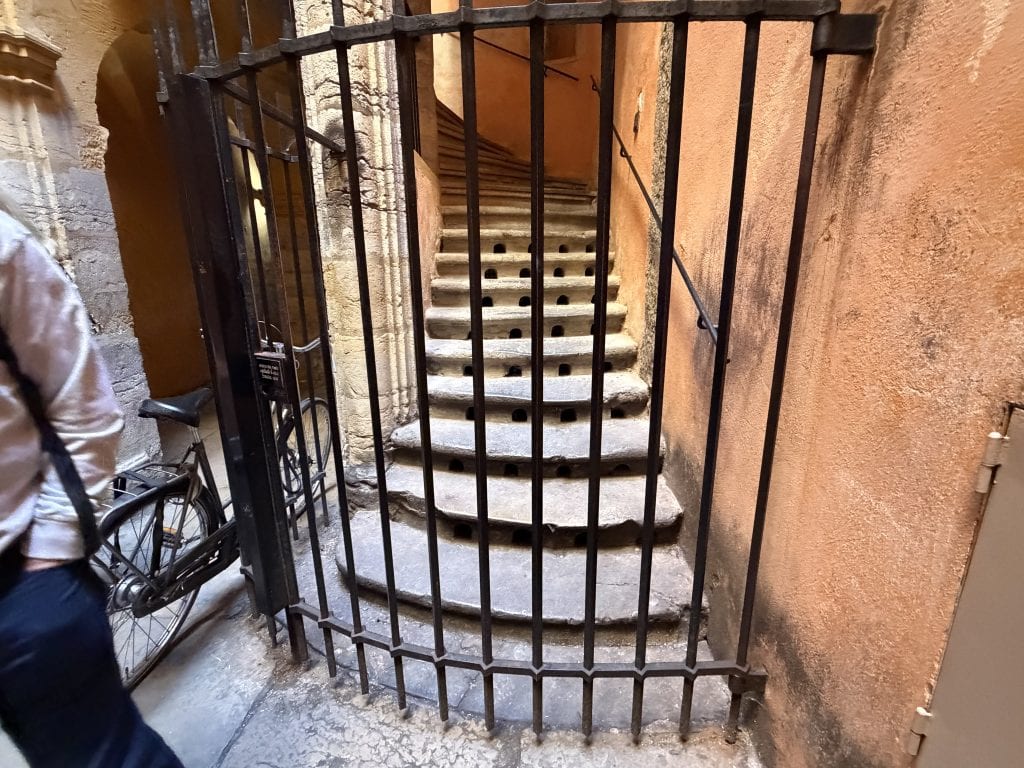
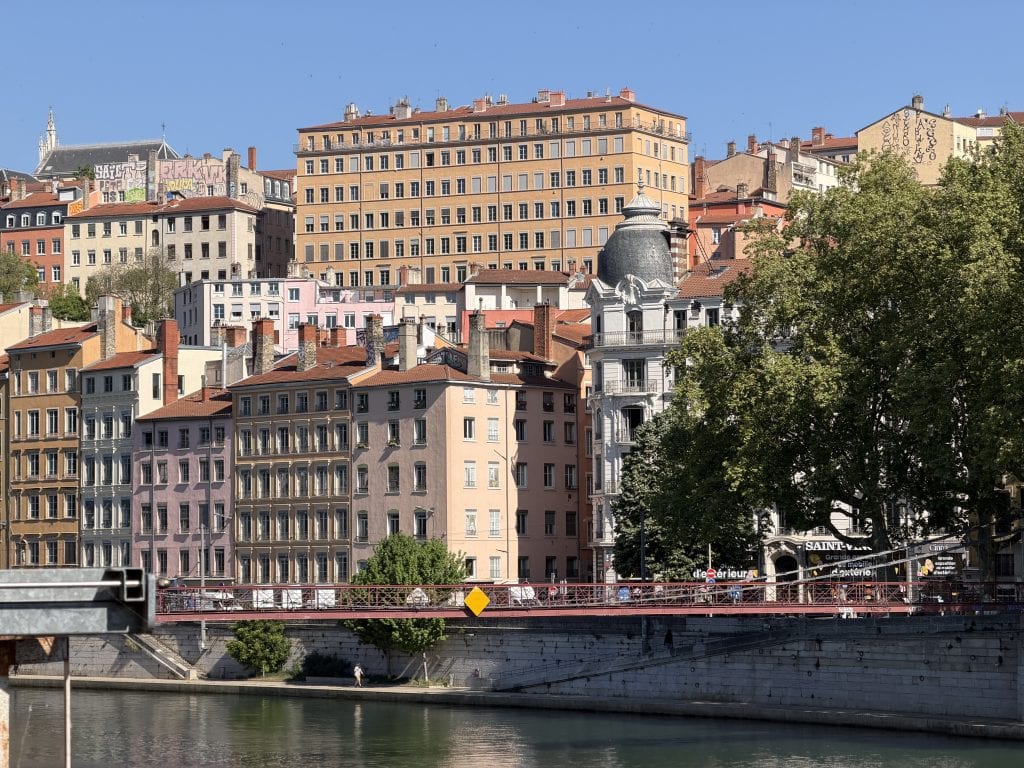
Toni gives us a very quick history lesson about the area. Apparently it was quite the place, and then “nothing happened for 1,000 years”. This quick jump sped up the story significantly. Then we had the second golden age. There was a Silk Road, coming from Asia, and this was the western terminus. This place was not unlike Venice and Toni points out houses so low that we can tell that a boat from the nearby river could easily edge up to the house’s front door. Later we’ll see where you can (well, used to could) walk down the spiral staircase from your house, hop into your boat, and navigate the underground channels leading out to the river.
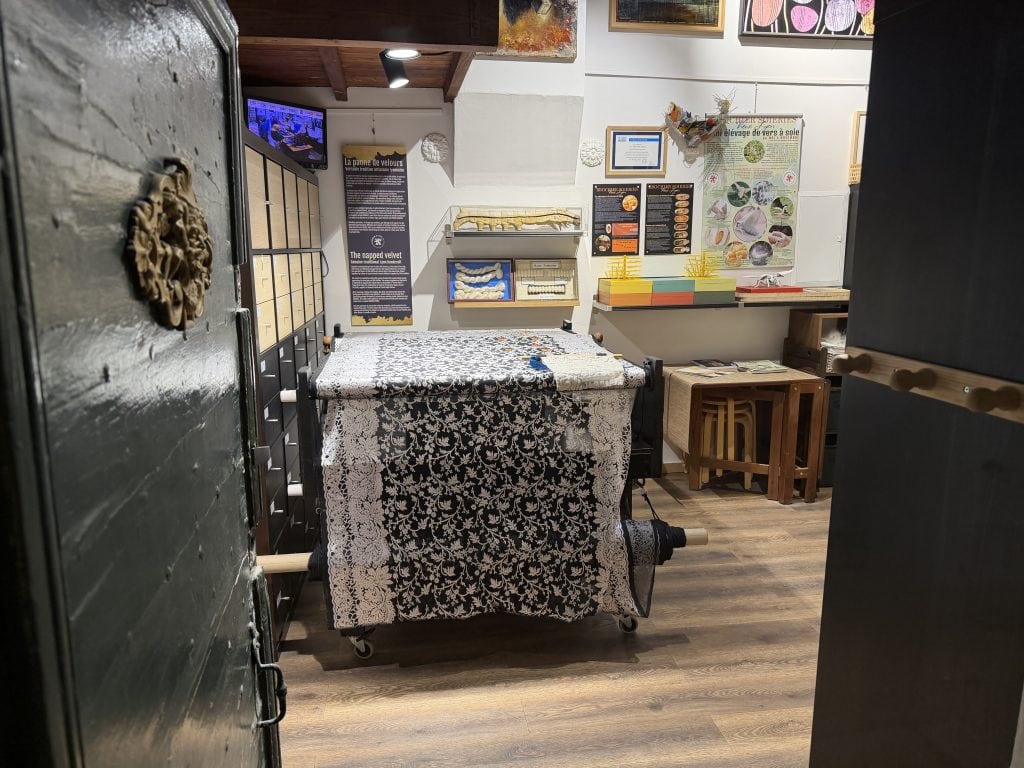
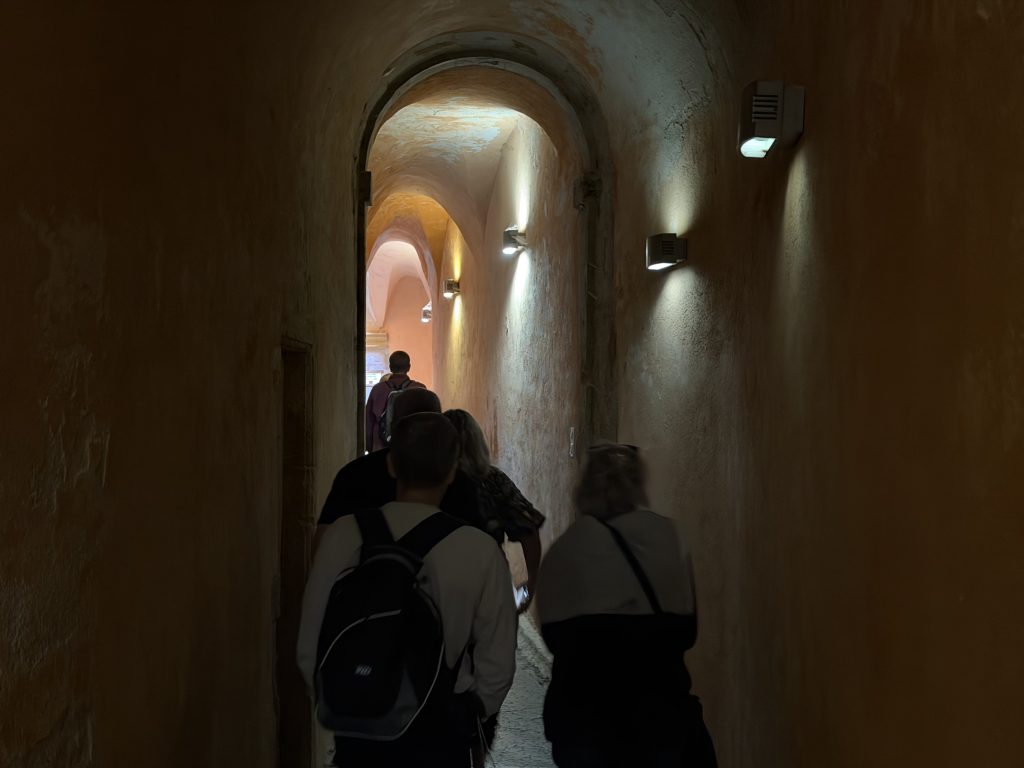
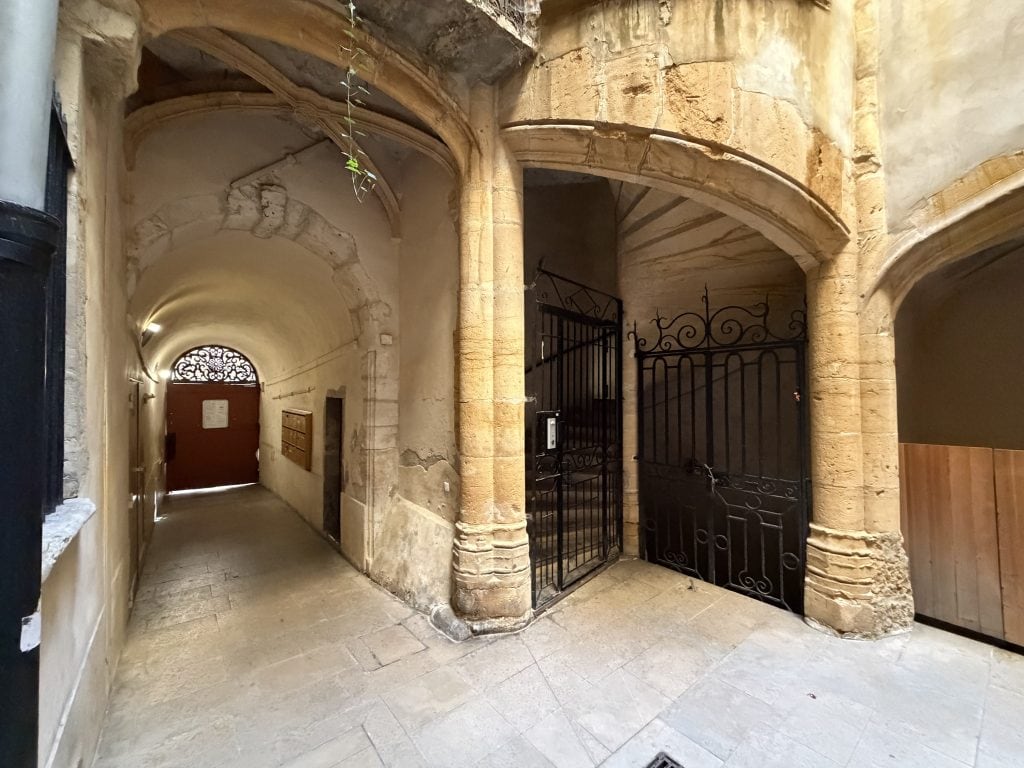
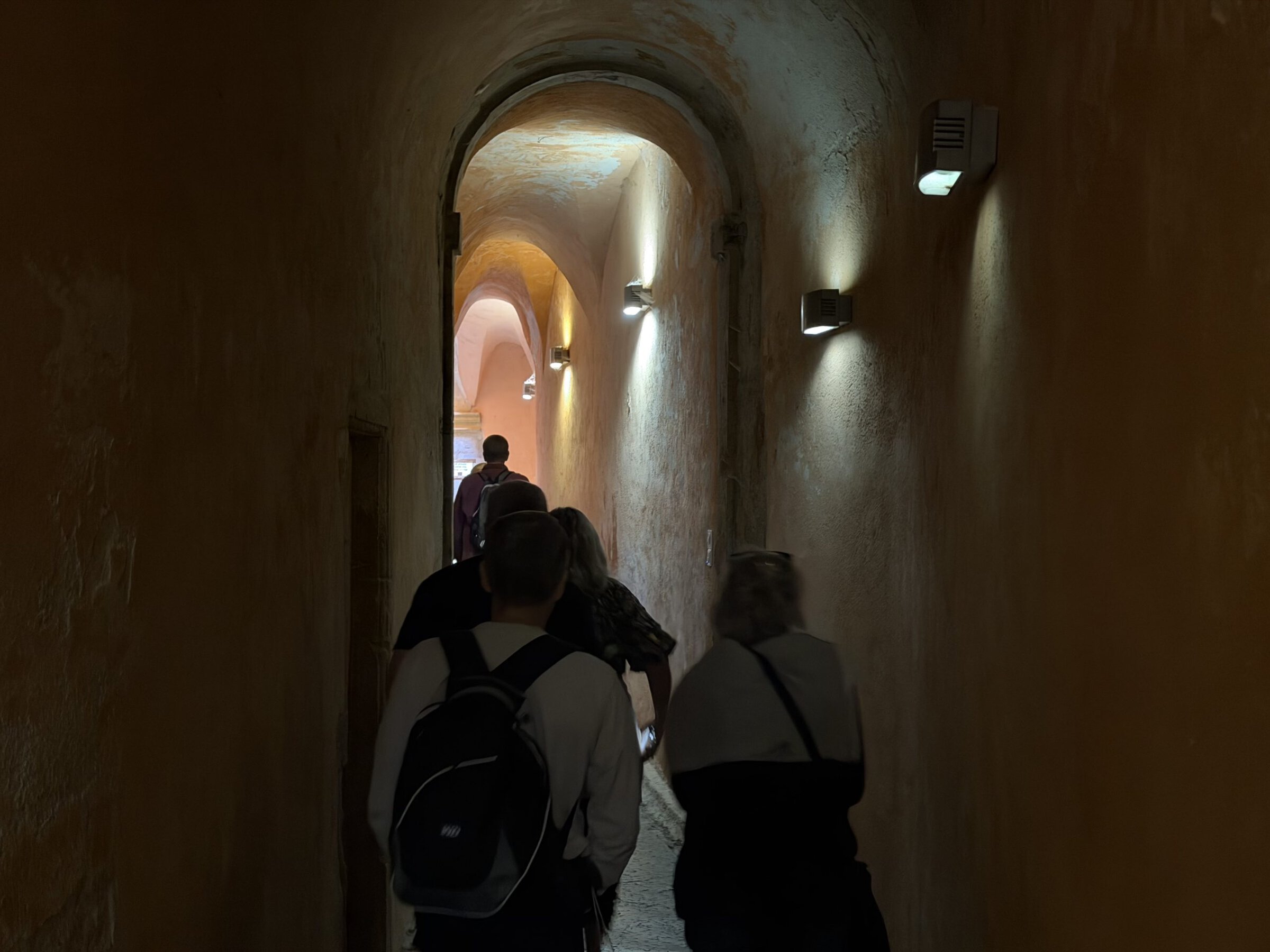
At one time 80% of the population of Lyon were in the silk business. Unprocessed silk is susceptible to rain and so they created covered passageways from street to street to street. They’re called traboules and they let the workers get to the docks while avoiding any problems with the weather. In the world wars the passageways were good places to pass secrets without the occupiers getting wise to your planning.
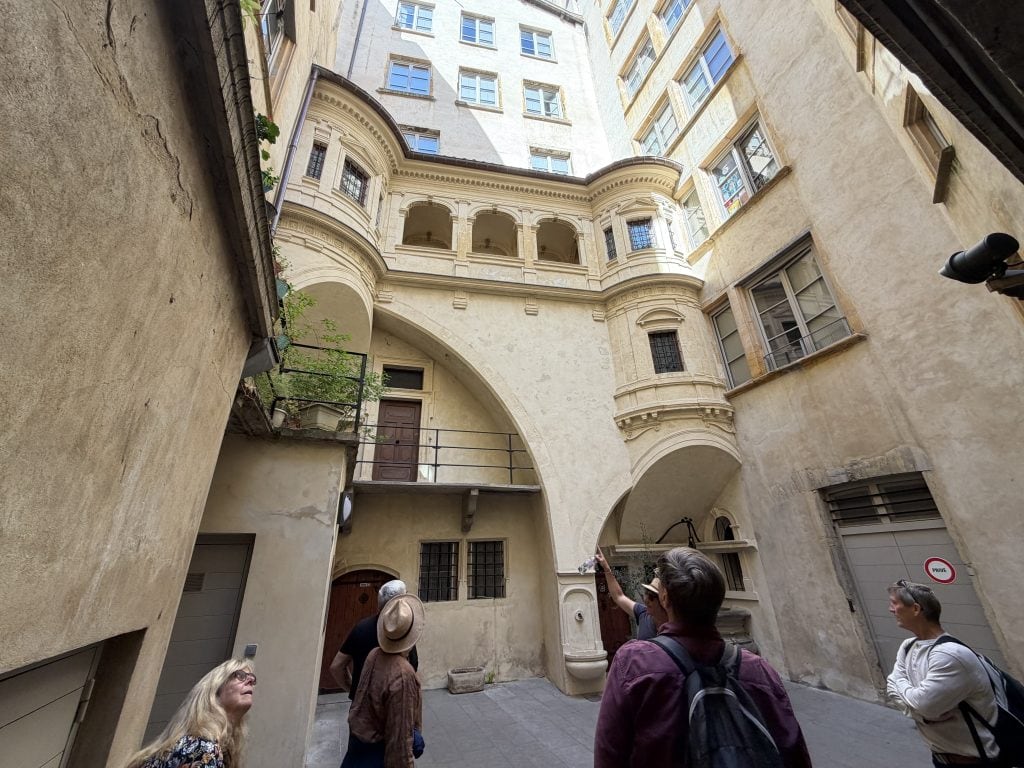
The “secret” part of the tour were the traboules, but also a number of building courtyards that Toni had access to. The locals wanted to show off their wealth, so they created very impressive towers. But they didn’t want strangers to know they’re wealthy, so they had the towers built in the courtyard, so you could only see them once you were in.
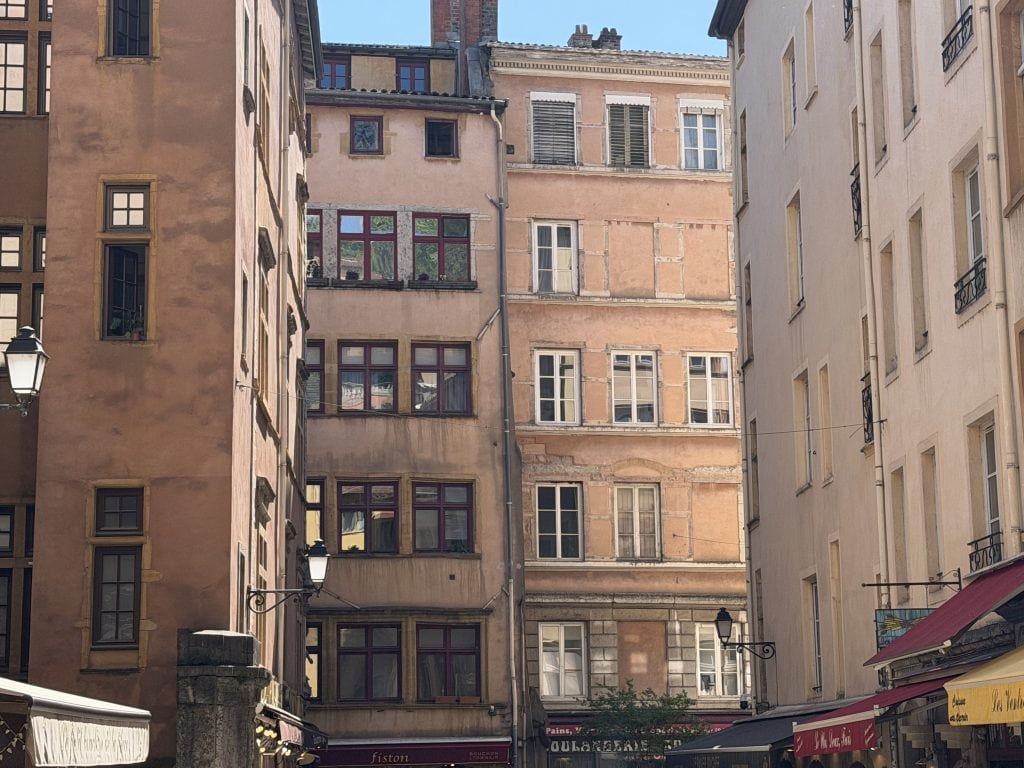
We see buildings where there are windows that have been filled in with rocks and mortar. Apparently the tax man would come around and count the number of windows on your building and charge accordingly. If people were having trouble making their tax payments they’d simply seal off a window or two. Problem solved. But they’re not so pretty, so what to do? Trompe l’Oeil, fool the eye, where a painted window is put in place of the previous real one. Supposedly that’s how it started. Lyon is famous for some of its trompe l’oeil, including one entire side of a tall building where all of the windows are fake, including balconies and storefronts. On many of the balconies are (painted) famous people from Lyon’s past and recent present. It starts with people from 100s of years ago and ends with the Lumière brothers (think cinema) and Paul Bocuse (food).
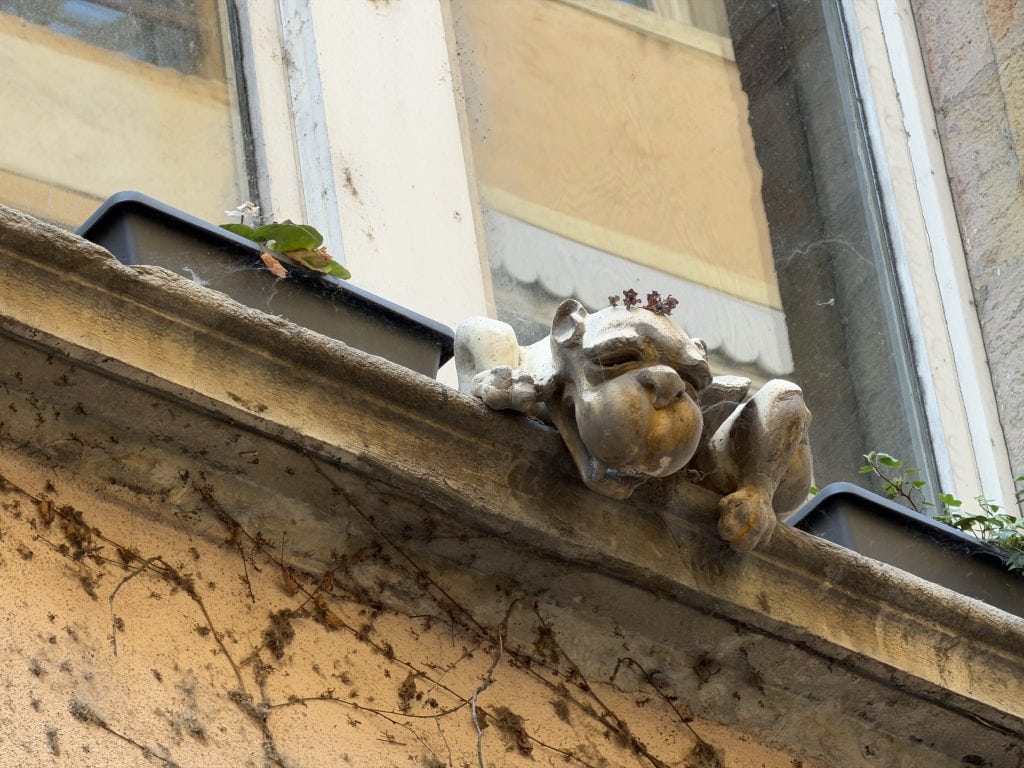
We see cats sitting on high window sills. They’re stone and apparently they’ve been there since the days of the plague. The thought was that the plague was brought/spread by rats and mice and the cats (albeit stone) would scare them away. Thinking is it didn’t work for sh*t. On the same street one house had huge busts of lions protruding from the building every few meters. This was the house of the Borgias and is the biggest one on the street or city for that matter. Today pretty much every lion bust looks a bit off, busted, if you will. Apparently a neighbor, an influencer in his day, suggested that the Borgias had hidden gold in the noses of the lions and the readers checked to make sure. The name of that influencer? Nostradamus.
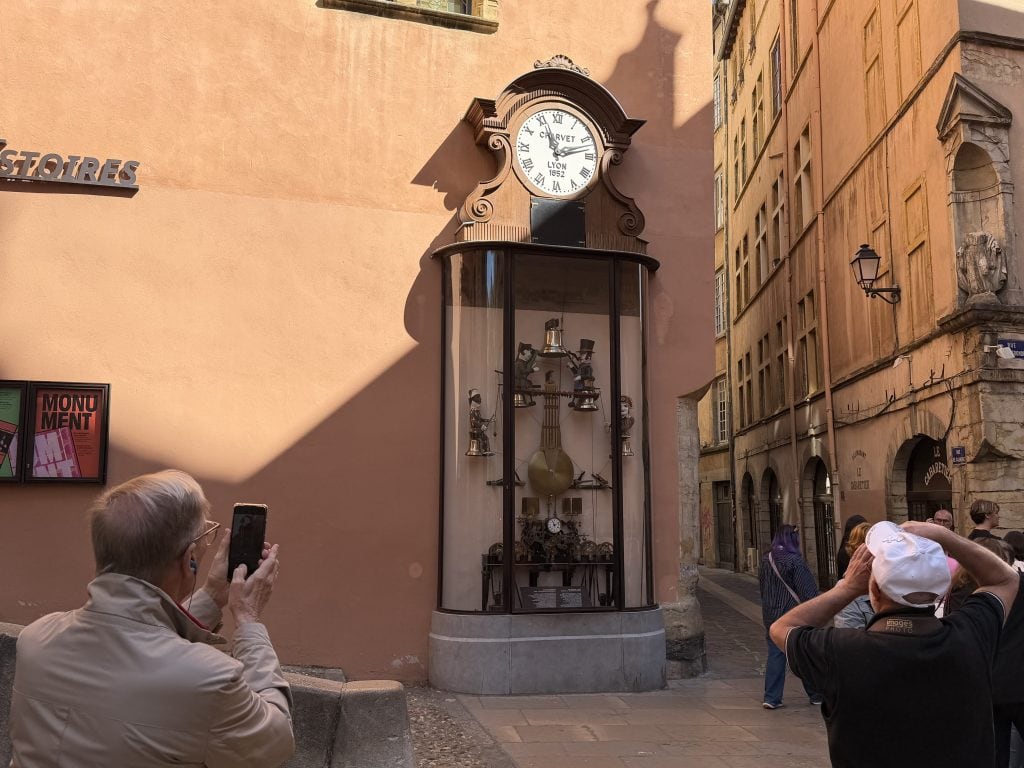
We see where marionette puppets were invented and heard how that had been a pharmacist’s place. The good doctor would also pull teeth for free, but after the pulling, if you later decided you required some pain killer, well that… that’s going to cost you.
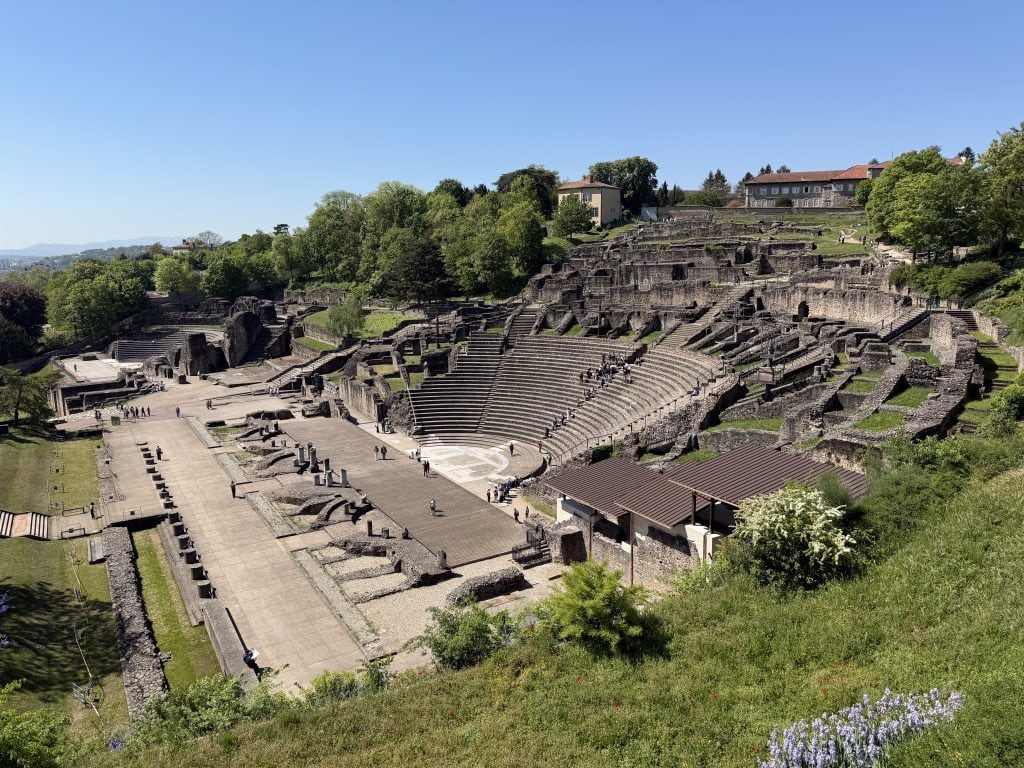
We take the funicular up to see the Roman Amphitheater and hear about the local Roman General (Augustus?) who oversaw the work here. Apparently he was afraid that he would be poisoned, so he took poison every day, to try to build up his immunity. It didn’t work. Subsequent Generals took a different tact. They “employed” food tasters, to ensure the food and wine wasn’t poisoned. Apparently the job paid very well and was a job for life (necessarily).
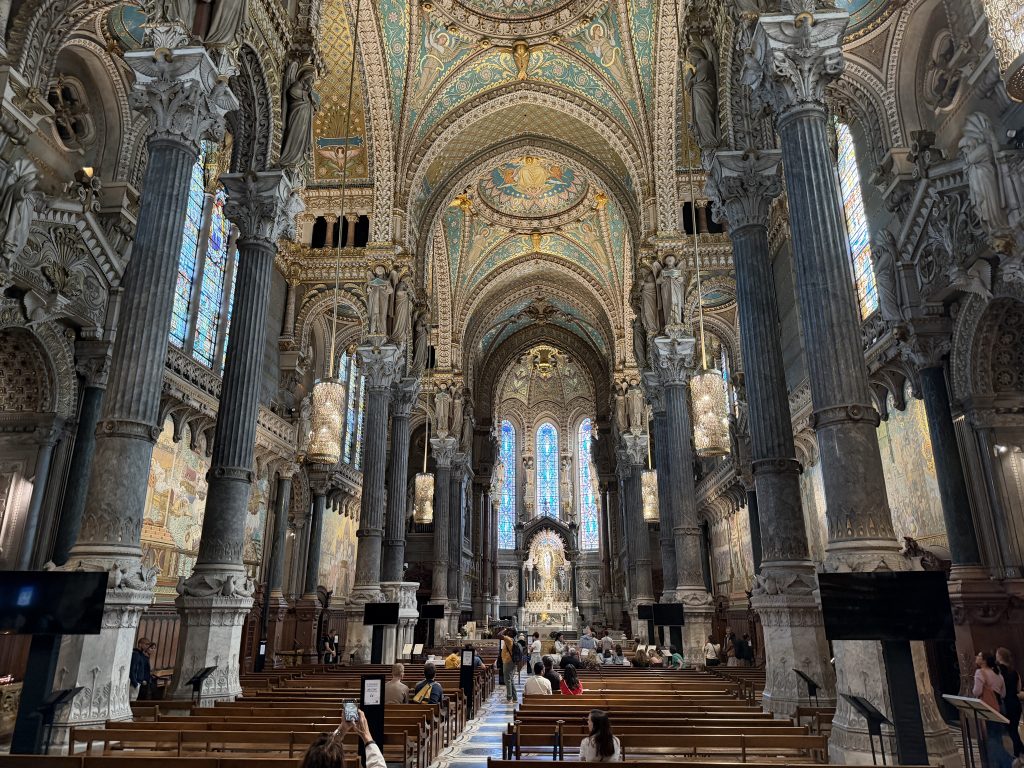
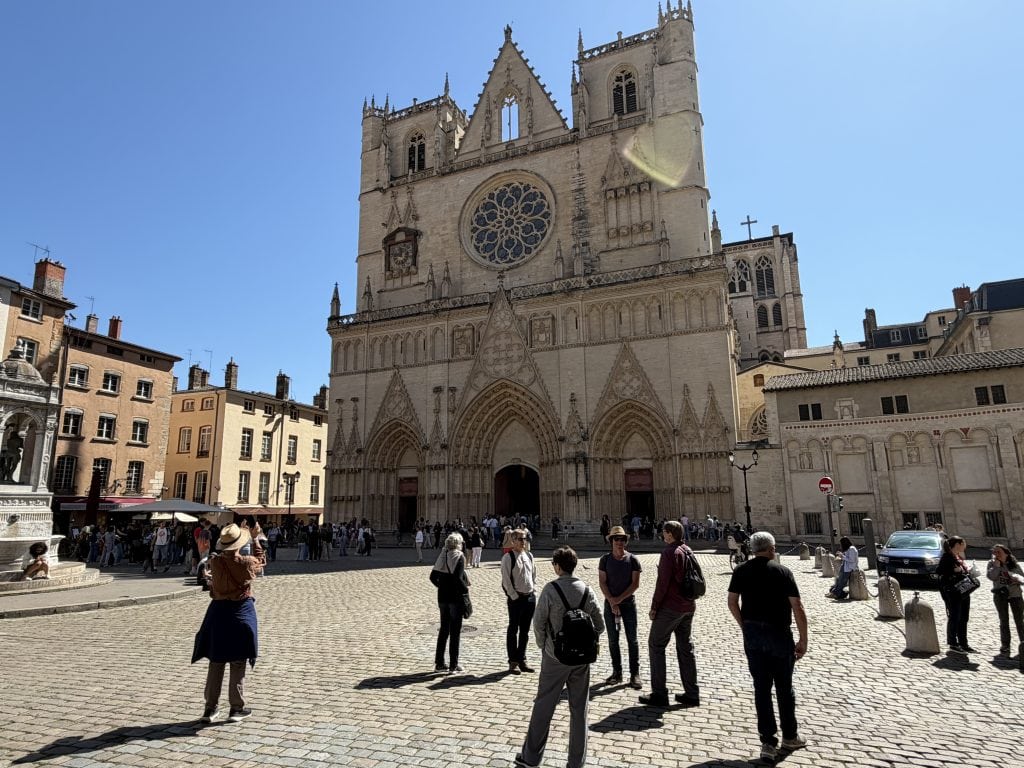
We end up at the big basilica and go inside to look around. It’s amazingly ornate and decorated. Supposedly it was supposed to be even more so, but they ran out of money. As we look at it we’re hard pressed to see where they could have added any more frou-frou.
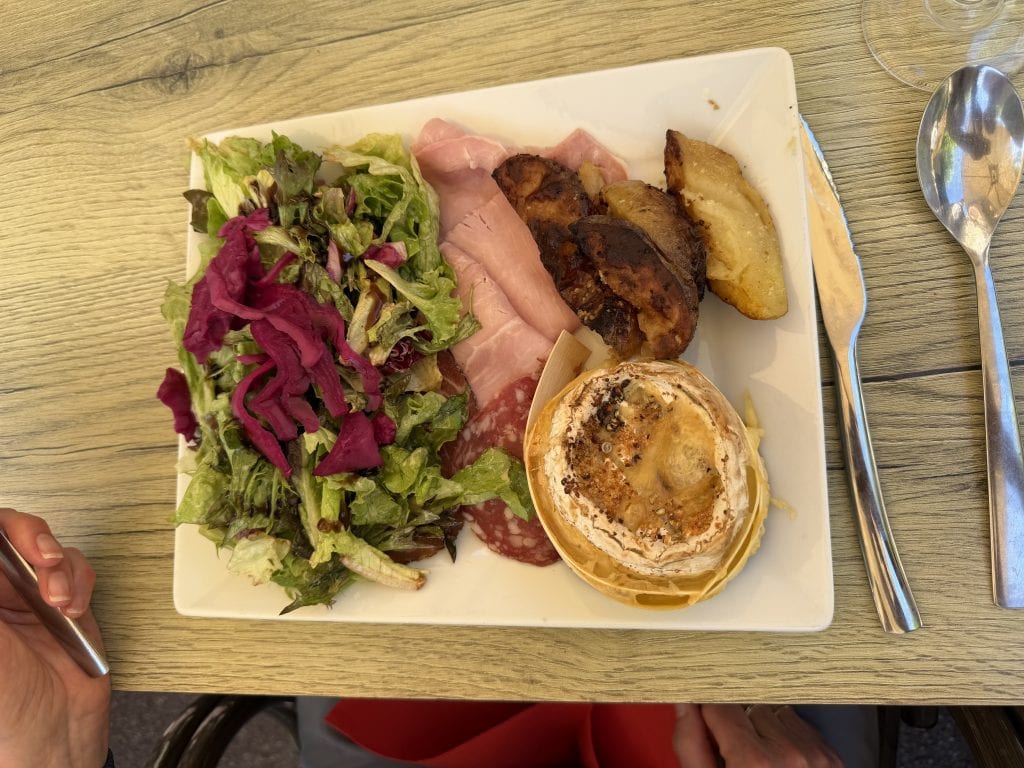
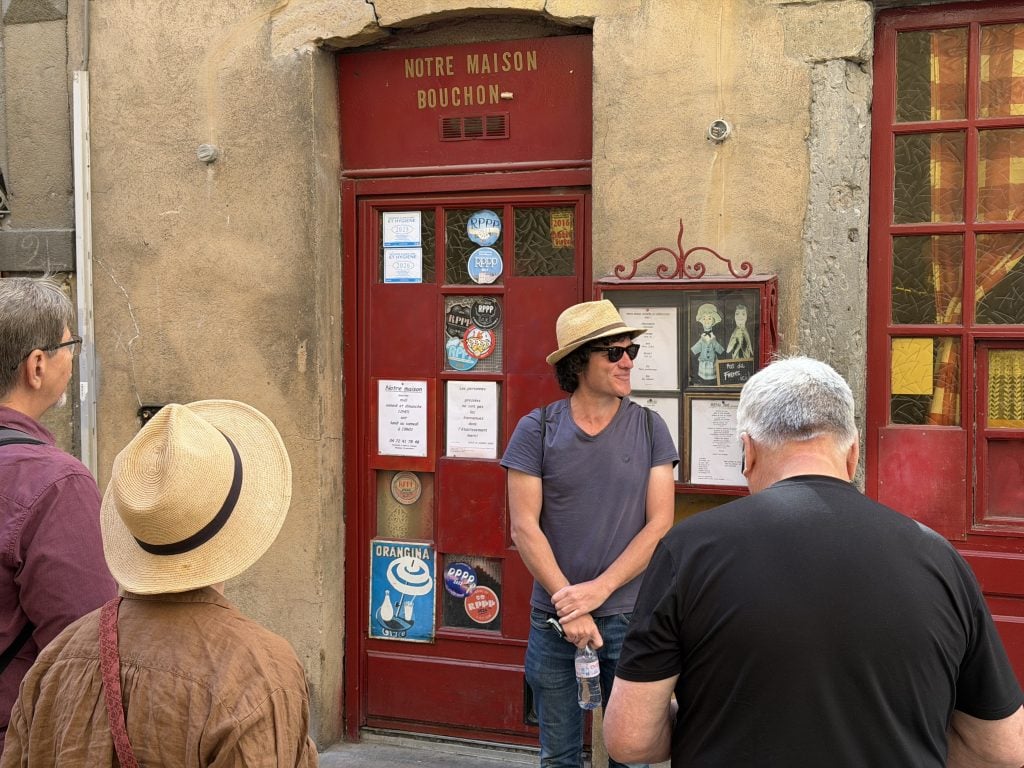
With our brains overflowing with new facts we reach then end of the tour, say our thanks and tip Toni. We find a nearby restaurant and plant ourselves outside. They’re full so service is a bit slow (as we’d been warned) but it’s a lovely day and the beer helps pass the time. Food is good. I have the local pork speciality with Fourme d’Ambert sauce (blue cheese). It’s very good and I look up what part of the pig is it. Depending on who you read it’s Spider Pig or Pig Spider. Neither sounds good, but apparently it’s from a part of the pig that has thin veins of fat going out like a spider web.
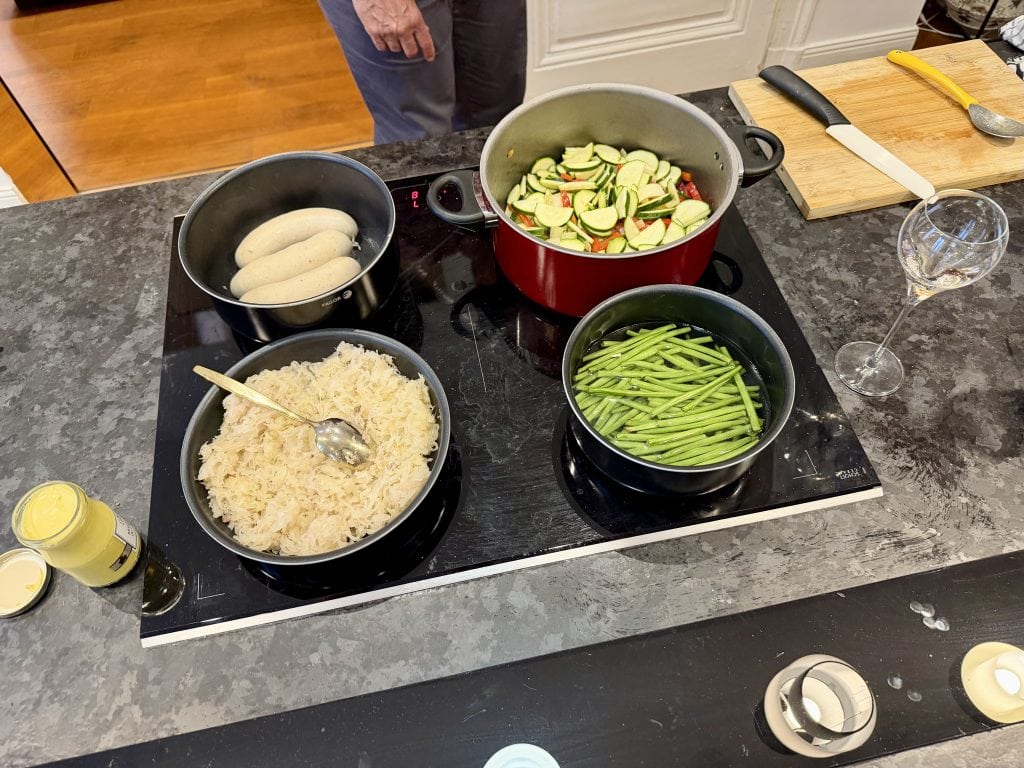
The kids (Ron, Nancy, and Karen) Uber back home and I walk. We crash and relax before going out to buy dinner. The main part came from an amazing butcher pretty much directly underneath our VRBO. We have Alsatian sausage and choucroute (sauerkraut) and French wine, of course. It’s all tasty.
Photos
[Note: to view the photos in chronological order, start at the bottom :-/ ]